Meta title – How long does SEO take? | Red Digitals
How long does SEO take to show results? It’s a million-dollar question as mostly businesses and entrepreneurs ask such questions before investing in SEO services for their business.
Whether you are an SME or a large-scale enterprise, you would require a timeline to know when you will start seeing results. After a month? 2 months? 3 months or more.
It’s frustrating at the start as you just have to invest without any certainty of return on investment. A large-scale company must be spending around $100 or more on just the SEO services, and you are already doing it for better results, but showing no organic leads or so.
When will your efforts pay off? In this blog, we will answer all your queries, and we hope you enjoy reading along with us.
How long does SEO take?
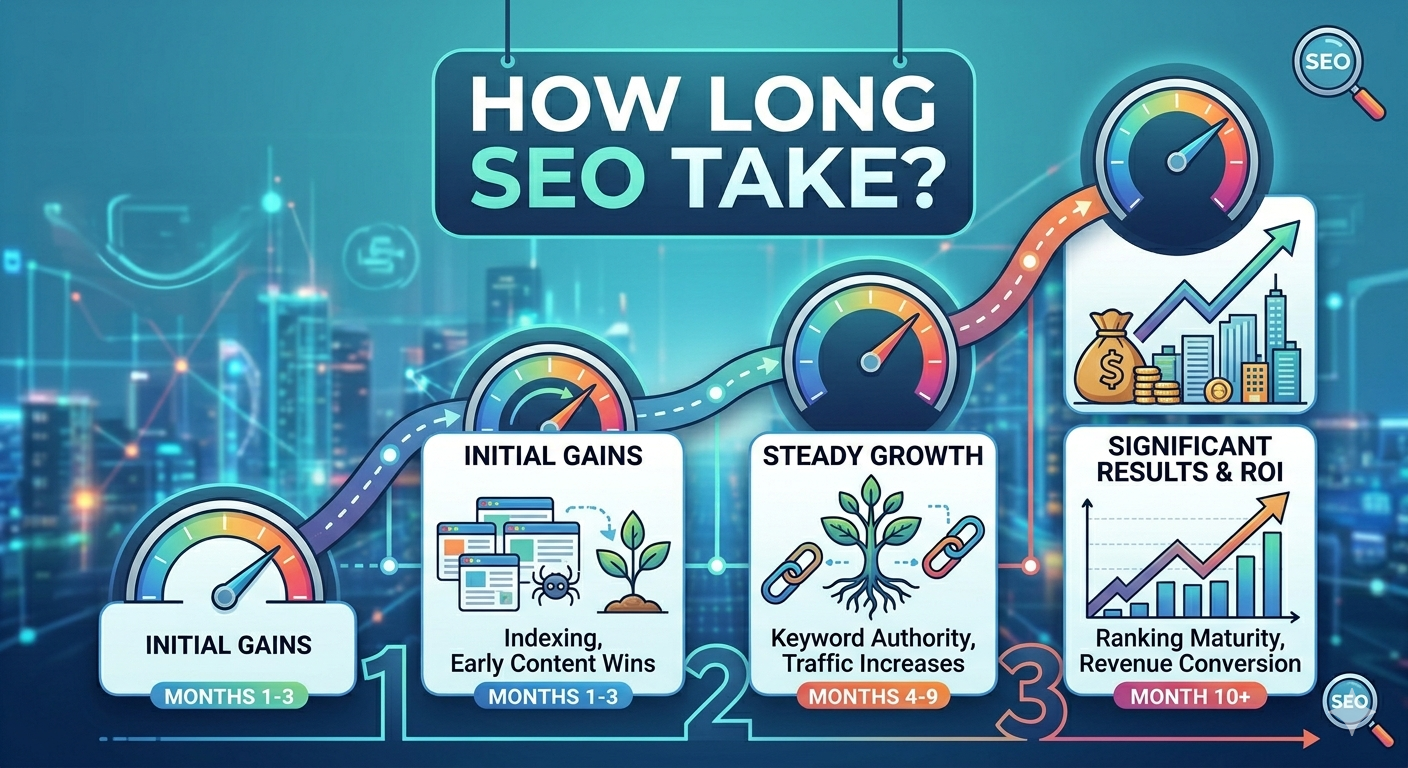
On average, SEO takes around three to six months to show results. In contrast, some sites require six to 12 months. It depends on different factors like the website’s competitors, whether the site is crawlable, and how much time the business dedicates to SEO.
Why does SEO take time?
Most of the businesses ask this question about the search engine optimization algorithm that takes to show results. With more content to evaluate and the competition being so fierce, it’s good to understand the fact that it would take longer for a website owner to see results and increase the ranking or traffic. Almost all of the websites are working hard to grab the first ranking or the top 10 places. You need to be really strategic and precise while implementing any strategy.
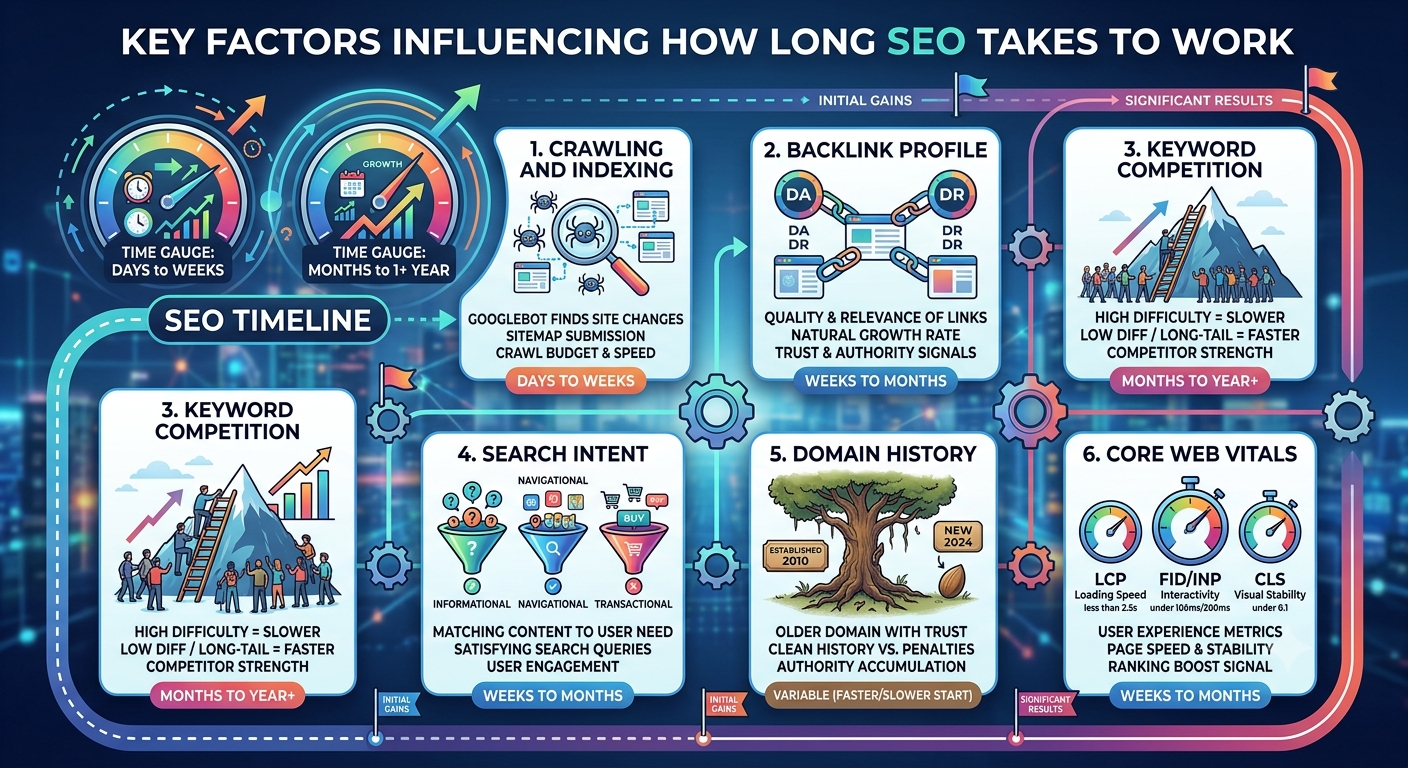
Key factors influencing how long SEO takes
The most influential reasons behind how long SEO takes to work include:
-
Crawling and indexing:
If the search engine can not crawl your website or even index it, then you will be waiting for a longer time just to see any results because the two functional steps are absolute precursors to a higher ranking on the SERP.
You would need a web crawler to discover your website so all of your page descriptions can enter the search engine index, and you can quickly troubleshoot the issues using tools like Google Search Console.
Even after all the efforts, the search engine still doesn’t crawl or index the website, so some other steps should be taken. You may look for additional technical considerations that dictate the overall timeline, which includes the crawling rate settings, and the XML sitemap update schedules with internal linking optimization and crawling frequency.
-
Backlink profile:
A strong backlink profile is really important for ranking higher and boosting the overall visibility of the SEO based website.
Backlinks in general are an instant game-changer. Similar to citations in academic research papers, backlinks signal the search engine that the content is guide and valuable. Backlinks for authoritative and higher-ranking websites would help in achieving the SEO results because search engines view it as authoritative sources.
When search engines recognize that reputable websites are linking to your content, they are more likely to trust your website and rank it higher in search results.
-
Keyword competition:
Not every keyword is just as simple as it seems to rank. Keyword competition impacts the SEO ranking as well. Highly competitive keywords require high-end backlinkings, content strategies and link building to achieve the goal.
Long-tail keywords on the other hand have less competition whereas other keywords are harder to rank higher.
You can focus on long-tail keywords to show the results quickly as compared to focusing on short-tail keywords that are tough and hard to manage.
-
Search intent:
Search intent is another attribute that impacts the ranking factor. Whereas, if your content and blogs don’t align well with the search intent of the customers then, regardless of how good you write it down, it won’ t convert the dears.
You can use lead magnets like CTAs, Ebooks and more but to achieve the goal you should:
- Analyze the top ranking pages for target keywords
- Identify the common themes and content formats
- Determine the specific information you want the users to read
By implementing all of these user-focused practices and informative content, you are most likely to achieve the chance of ranking higher and attracting new customers.
-
Domain history:
The overall age spectrum of your domain also impacts the ranking of the website.
If you have an older domain then there are chances that you might achieve the ranking quicker as compared to new domains that are hard to get recognised by the search engine.
For a new domain, you would have to do strong backlinks, more indexed pages with quality driven content and a history of better performance on the SERP.
According to former Google engineer Matt Cutts:
“As long as you’ve been around for at least a couple of months, you should be able to make sure that you can show up in search results.”
-
Onpage Optimisation:
Even the best written content pieces also require proper backlinking, interlinking, and keyword optimization to rank higher on the SERP.
The most important onpage optimisation attributes include:
- Title tags
- Meta descriptions
- Keyword placement
- Header tags (H1, H2, H3)
- Internal linking
- Image optimization
-
Core Web Vitals:
Lastly, you should know that the user experience plays a great role in attracting the visitors and increasing the website’s performance. Google Core Web Vitals measure the following things:
- The loading speed of the pages
- Visuals
- Interactivity of the users with the website
All of the brands’ websites that take longer than 3 seconds to load and are difficult to use are ranked lower on the SERP. It’s important for an SEO strategist to analyze the speed of the website on a regular basis in order to detect the speed issues and solve them beforehand.
Business Factors That Affect SEO Timelines
Here are the factors that impacts the SEO timeline for a business:
- Leadership Support
- KPIs and Expectations
- Industry Competition
- Budgeting
- Resources
- Strategies
Make your SEO efforts worth the investment with SEO experts by Red Digitals
Let’s be clear guys – SEO is not magic but a long-term process that takes time to show results.
You may spend 6 months just to know about the keywords trends, market standard, competition and strategies. Whereas, it would take around 12 months or more to see vibrant results i.e. ranking on the first page, higher traffic and conversions.