More than 90% of snap judgements are based on the product’s color alone. You know both visuals and copy matter, but again, these two alone are not enough for attracting customers.
Connecting with the audience doesn’t only require the creation of the web pages but also working on color psychology as well. To truly connect with your audience and inspire conversions, you need something more profound — something intuitive.
That is where color psychology takes place, combined with marketing. In the first few seconds of the product interaction, color alone is not responsible for lifting the game, reshaping the perception, sparking the emotion, and even driving the traffic. Wherever used strategically, color may help in conveying your messages to the customers and influence them towards your brand.
Are you excited to explore complete color psychology with us? Let’s get started then…
Interesting Statistics about Color Psychology
Color psychology statistics show that 85% of consumers buy products based on color, and 62% to 90% of snap product judgments rely on color alone. Color also increases brand recognition by up to 80%.
- First impressions: Up to 90% of a subconscious assessment about a product happens in the first 90 seconds, driven mostly by color.
- Logo simplicity: 95% of the top 100 global brands use only one or two colors in their logos.
- Trust in finance: Over 75% of major banks and financial groups use blue to convey security and trust.
- Luxury perception: Black logos are perceived as 50% more luxurious than logos in other shades.
- Readership impact: Color visuals improve a person’s willingness to read text by 80%
What is Color Psychology?
Color psychology revolves around the different hues affecting thoughts, emotions, and behaviours. This concept has some ancient roots as well, from the Egyptians and Chinese. It’s a powerful tool in digital marketing, branding, and designing.
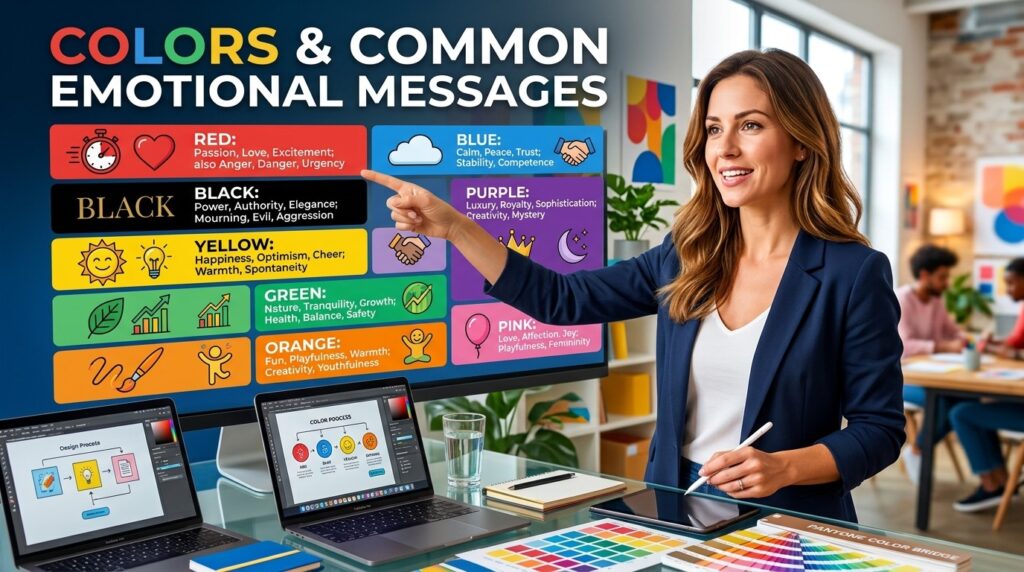
Before we dig deeper into how colors influence perception, let’s look at these fundamental color-emotion associations reported in psychological literature:
| Colors | Common Emotional Messages |
| Red | Passion, love, excitement;also anger, danger, urgency |
| Black | Power, authority, elegance; mourning, evil, aggression |
| Yellow | Happiness, optimism, cheer;warmth, spontaneity |
| Green | Nature, tranquility, growth;health, balance, safety |
| Orange | Fun, playfulness, warmth;creativity, youthfulness |
| Blue | Calm, peace, trust;stability, competence |
| Purple | Luxury, royalty, sophistication;creativity, mystery; |
| Pink | Love, affection, joy;playfulness, femininity |
Influence of Color on Emotions and Behaviour
Color stir strong emotional reactions and warm colors like red, orange, and yellow showcase high energy, like excitement, passion and urgency. Whereas, on the other hand, cool colors like blue and green are more relaxing shades.
According to some studies, blue and green color also reduces anxiety, and it is used by many psychologists in their presentations and blogs. Colors convey messages most amazingly, and it’s one of the best things any company would invest in after marketing.
Key Steps You Should Take Before Selecting Colors For Your Brand
Here are the fundamental steps you should take before selecting any color for your business’s logo or website:
- Aligning the colors with your business values:
As a marketer and color psychologist, you should choose colors that reflect the brand’s values and tone of voice. Focus on choosing colors that align well with your brand’s personality and offerings. For instance, if you have a healthcare website, then you should opt for blue or green color sharing the message of peace and protection.
- Audience preference should be the top priority:
Different audiences have different preferences, and it varies based on age, gender, and personality, depending on the target audience. Bright, bold, and sharp colors appeal to the youngsters, whereas black or darker shades attract senior citizens and mature groups of people.
- Consider cultural meanings:
Lastly, we have the cultural meaning where white showcases the message of purity in the West, but it shares the message of mourning in the Asian region. Red means urgency whereas it means danger in other regions. Perhaps, the messages behind color vary based on different regions and share different cultural values.
Therefore, we would say that;
Personal experience and culture affect how people respond to the colors. Whereas color in context theory says that the same color can carry very different meanings depending on where and how it’s used. A soft color like green or a lighter shade would convey the message of peace in a natural setting.
The Use and Psychology of Colors in Marketing
If we talk about digital marketing, then color matters a lot in it.
All the colors that you use in your business logo design reflect how people will see your brand and the influence they put in every action, like clicking a button or buying any product from the store.
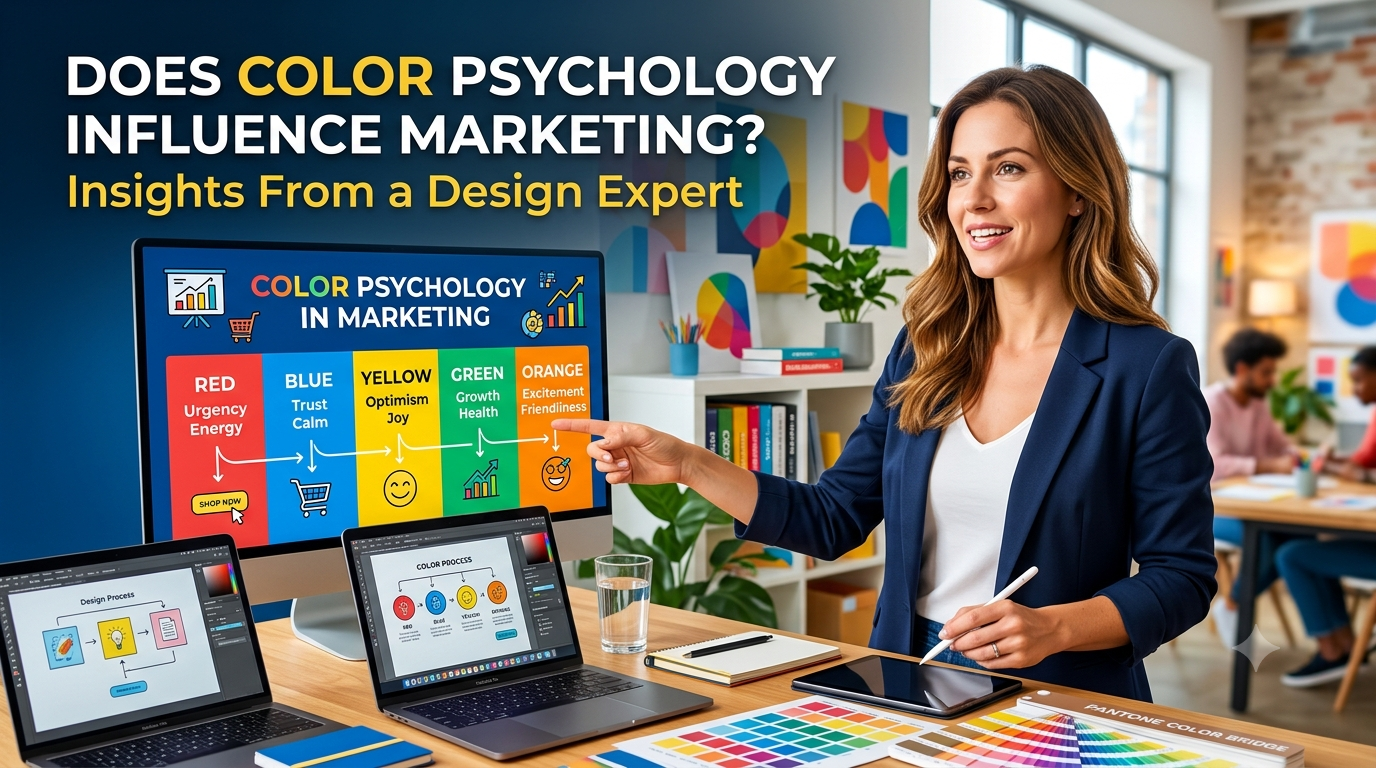
Whereas color psychology in marketing explains how different colors affect customer behaviour, and examples include red, which is mostly used for “discount” tags as it creates urgency and grabs the attention of the visitors. We use the color “green” or “blue” to create a calming effect and a trustworthy feeling.
This is where color theory comes in, and it helps designers, along with marketers, to choose the right colors that work exceptionally well together and support the brand’s identity while creating a lasting emotional relationship.
How to Choose the Right Brand Color for Your Business Logo –
Here are some fundamental steps to take as you develop your brand color palette:
- Establishing a clear pathway:
The first and most important step is to use contrast for highlighting the key actions on the website and catching the user’s attention step-wise. Assigning distinct colors from the palette, like red for the cancellation, and other colors for secondary actions, along with the white background, would make things easier to understand.
- Accessibility for all user preferences:
As a marketing specialist, and after doing in-depth research about color psychology, we would suggest that selecting high-contrast color combinations would support the readability concerns and users with visual impairment. In this way, your website will support both categories of target audience, and your CRO spectrum would get wider automatically.
- Interactive elements assurance:
You know, the instant color shift during the hover or click on the website makes users more likely to say that the website is interactive. Whenever you implement these practices in your website, maintain consistency and use colors from the same family for both primary and secondary buttons.
- State changes through visuals:
You may pair a color change with animation (slightly) to make it look more interactive and engaging. Whereas combining color changes with icons and text changes along with animation would signal completed actions.
- Test, improve, and implement:
Lastly, effective color use would require constant testing and feedback from the team members and clients, which is known as A/B testing. Therefore, you should ensure you test the changes made and see how they are resonating with the outcomes.
Collaborate with Red Digitals for turning Color into a Necessity for Businesses
Color plays a great role in attracting customers and bringing their attention to a specific action on the website. We hope you are now pretty much clear with the basic understanding related to color psychology and how these shades are attracting customers.
If you still have some misconceptions, then Red Digitals is here to rescue. You can collaborate with the marketers working under their firm and see how they are turning business ideas into a million-dollar revenue firm.
FAQs
- What is color psychology in marketing?
Color psychology in marketing refers to how visual hues influence consumer behavior, driving up to 90% of snap judgments about products
- What does red color indicate?
The color red symbolizes strong emotions, primarily representing passion and love, energy and action, and danger or warning.
- How do colors impact the customer buying journey?
Yes, it triggers subconscious emotional reactions that guide shoppers from first noticing a brand to making a final purchase.